
Copyright Registration Protect Original Creative, Artistic, Musical & Software Works
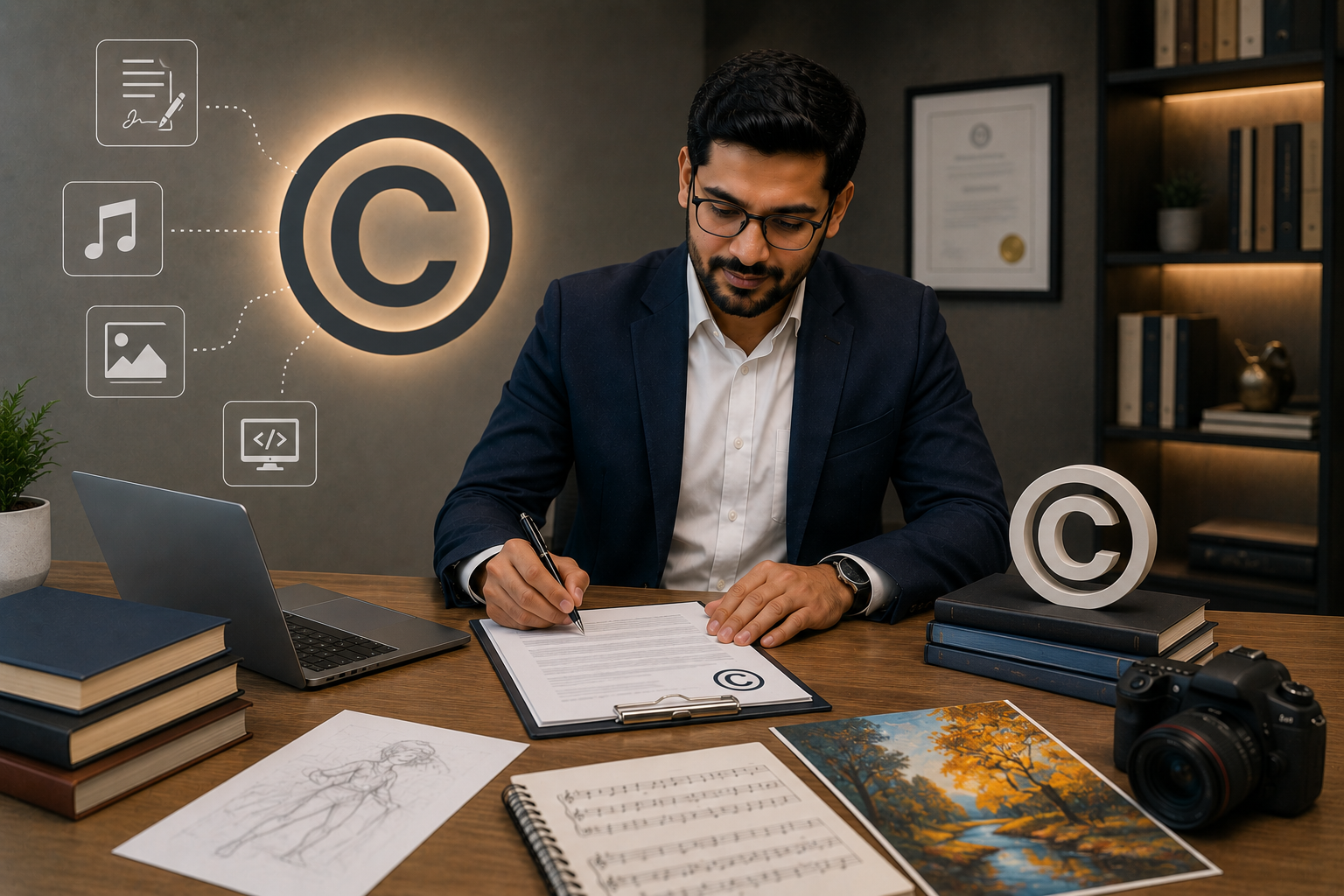
Copyright Registration protects original literary, artistic, musical, dramatic, and software works under the Copyright Act, 1957. It helps creators and rights holders establish legal ownership, control reproduction and use, and strengthen enforcement against copying, unauthorised use, or commercial exploitation.
What is Copyright Registration?
Copyright Registration is the official registration of an original work with the Copyright Office to formally record ownership and authorship rights under the Copyright Act, 1957. It applies to original literary, artistic, musical, dramatic, software, and certain other creative works, provided they meet the requirement of originality.
Copyright exists from the moment an eligible original work is created, so registration is not compulsory for the existence of rights. However, registration is highly beneficial because it creates strong evidentiary support for ownership, facilitates enforcement, and strengthens the owner’s legal position in disputes, infringement actions, and commercial licensing transactions.
The term of copyright protection depends on the category of work. For many literary, dramatic, musical, and artistic works, protection generally extends for the lifetime of the author plus 60 years, while some other categories such as sound recordings, photographs, films, and certain published works follow different 60-year rules based on publication or creation.
Key Benefits of Copyright Registration
Copyright registration helps creators secure ownership and commercially benefit from their original work.
-
Legal Ownership Registration creates strong legal evidence of ownership and supports the copyright holder in enforcement, licensing, and dispute resolution.
-
Protection from Copying It helps the owner act against unauthorised copying, reproduction, adaptation, publication, distribution, or misuse of the protected work.
-
Monetization Rights Registered copyright supports licensing, assignment, commercial exploitation, royalties, publishing, software rights management, and other monetisation strategies.
Documents Required
The exact filing set depends on the nature of the work, but these are the common basic requirements.
Work Copy
A copy of the work must be submitted in the applicable format, such as PDF for literary or software works, image format for artistic works, or other prescribed formats based on work type.
Author Details
Details of the author and the applicant or owner are required, including identity information, authorship declaration, and rights ownership details.
Declaration
A declaration or supporting statement confirming originality, ownership, and filing particulars is generally required as part of the copyright application set.
Process & Timeline
Copyright registration is filed online and usually takes around 2–6 months in many cases, depending on the type of work, document quality, objections, diary processing, and examination progress.
Prepare Work & Filing Details
Identify the correct category of work, prepare the work copy in the prescribed format, and keep the author and applicant information ready.
File Online Application
Submit the copyright registration application online through the Copyright Office portal and upload the work and required supporting documents.
Diary Number Generation
After successful filing and fee payment, a diary number is generated for future reference and tracking of the application status.
Waiting / Scrutiny Stage
The application goes through the prescribed waiting and scrutiny process, and objections or discrepancies may be raised if the office requires clarification.
Registration Certificate
If the application is accepted, the registration is entered in the Register of Copyrights and the copyright registration certificate is issued.
Get Started — Apply Now
Fill in the form below and one of our IP specialists will help you prepare and file your copyright application correctly.
Frequently Asked Questions
Books, literary works, music, software, artistic creations, scripts, dramatic works, and other original eligible works can be protected under copyright law.
For many literary, dramatic, musical, and artistic works, copyright generally lasts for the author’s lifetime plus 60 years, while some other categories follow different 60-year rules based on publication or creation.
No, registration is not compulsory for copyright to exist, but it is highly beneficial because it provides strong evidentiary value and practical enforcement support.
Yes, copyright registration can be filed online through the official Copyright Office portal.
Yes, copyright gives the owner legal rights that support action against unauthorised copying, adaptation, publication, or commercial use of the protected work.
Separate filings are generally required for separate works unless they fall within a filing structure specifically permitted by the applicable procedure.
The cost is moderate and depends on the type of work, filing category, official fee, and whether professional assistance is taken.
No, copyright registration does not require periodic renewal in the manner seen in trademark law.
Yes, the author and owner can be different depending on assignment, employment, commissioning arrangements, or contractual rights transfer.
Yes, copyright registration serves as strong evidence of ownership and significantly improves the owner’s position in legal and commercial disputes.